


Practical ways to enjoy tea and coffee with less risk, strain, and stress
For many people, making a cup of tea or coffee is part of everyday routine. But when strength, balance or grip changes, hot drinks can become one of the riskiest tasks in the kitchen. Listing a heavy kettle, pouring boiling water, or carrying a full mug can increase the risk of spills, burns, and loss of confidence.
This guide looks at simple, practical ways to make hot drinks safer and easier every day, using hot drinks aids and small changes that support independence – without turning the kitchen into a clinical space.
Why hot drinks can become a safety concern
As we age or live with conditions that affect mobility or grip, tasks involving heat and weight require more control. Common challenges include:
- Reduced grip strength
- Wrist or hand pain
- Balance issues when lifting and pouring
- Fear of spilling boiling water
That’s why so many people search for safe kettles for elderly users or easy pour kettles – they want to keep enjoying daily routines without unnecessary risk.
1.Choosing easier and safer ways to pour hot water
One of the biggest risks when making hot drinks is lifting and pouring a full kettle. Tools designed to support this task aim to reduce strain and improve control.
Helpful features to look for:
- Lightweight design
- Stable base
- Controlled, slow pouring
- Reduced need to lift
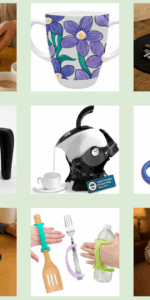
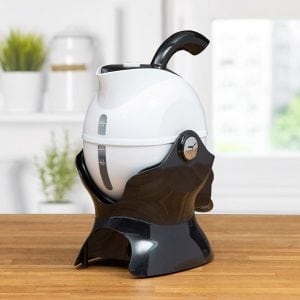
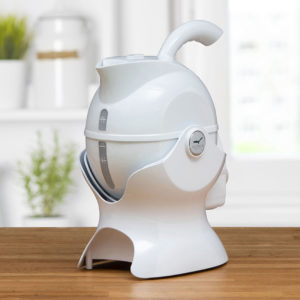
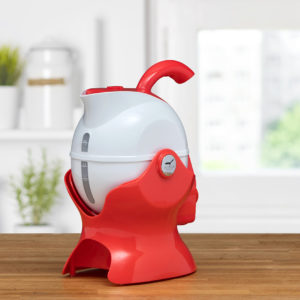
Easy pour kettles (like the Uccello Kettle) and kettle-tipping solutions are often recommended as a safer kettle option for elderly users, as they reduce the effort and precision required when handling boiling water.
2. Reducing spill risk at the mug stage
Once the drink is poured, stability still matters. Carrying a hot mug across the kitchen can be difficult if hands are sore or unsteady.
Hot drinks aids that improve control include:
- Two-handled mugs for better balance like the Rosa Cup
- Mug Holders that support grip like the Muggi
- Cup with wide bases to reduce tipping
These small changes can make a noticeable difference, especially for anyone managing hand pain or reduced strength.
3. Improving grip and control when stirring or holding
Stirring tea or coffee requires fine control, which can be uncomfortable with arthritis or stiffness.
Grip-friendly solutions include:
- Spoons with thicker handles
- Non slip grips
- Lightweight materials
These tools are often overlooked but play an important role in reducing hand strain during everyday tasks.
4. Making the work surface safer
Slippery surfaces can increase the chance of spills. Using non-slip mats under kettles, mugs, or trays helps keep items stable while you pour or stir.
This is one of the simplest hot drinks safety aids, yet it’s highly effective for reducing accidents.
5. Pacing routines to reduce fatigue
Safety isn’t only about equipment – it’s also about how tasks are done.
Helpful habits include:
- Filling kettles with only the water you need
- Taking a short pause before pouring
- Sitting down while waiting for the kettle to boil
- Using a tray to carry drinks in stages like the Muggi Cup Holder
These small adjustments reduce fatigue and help keep movements controlled and steady.
For family members and carers
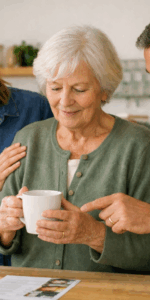
If you’re supporting someone at home, hot drinks are often where risk shows up first. A kettle that feels manageable to you may feel heavy or unstable to them.
When choosing hot drinks aids:
- Prioritise stability and ease of us
- Avoid tools that require learning complex steps
- Focus on solutions that feel familiar and dignified
The goal isn’t to stop someone making their own tea – it’s to help them do it safely.
Enjoying hot drinks shouldn’t feel risky
Hot drinks are about comfort, routine, ad enjoyment. With the right combination of easy pour kettles, safe kettle options for elderly users, and simple support tools, it’s possible to reduce risk and keep this everyday pleasure part of daily life.
Small changes can make a big difference – not just to safety, but to confidence and peace of mind.


Leave a Comment